The Political and Economic State of the World

Background
There was once a man who wished to buy a donkey to help with his yard work and to move heavy things around. He said to his son, “I’m going to buy a donkey so we will have less work to do, God willing.”
The boy replied, “If you do buy a donkey, can I ride it? That would be so fun.”
The man, who was very impatient, grew angry at the thought of his son doing something so foolish. He shouted, “Why would you ride the donkey? Are you stupid? You’ll break the donkey’s back!”
In his rage, he struck his son so hard that the boy died.
Stricken with grief, the man decided not to buy the donkey after all.
The expression “A cheig a deng amol” translates to “getting on the donkey.”
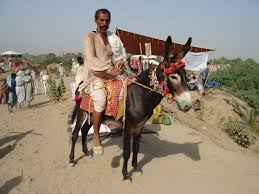
Then moral of the story is that the son died as a direct result of his anger and the future pretense of something that hasn't even happened yet.
Gerrymandering
Looking at America's fractured society today, and the promises of more states engaging in gerrymandering, I get the same feeling as in the parable above — with the fate of the common people (the son) at stake.
When I googled gerrymandering, here is the definition that appeared:
manipulate the boundaries of (an electoral constituency) so as to favor one party or class.
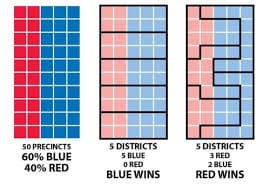
I want to focus on the part about favoring one party or class. Why do we even have electoral constituencies, states, or borders? Why must we create these artificial boundaries, draw them up, and then fight over territory when we are all derived from the same primate?
In a perfect world, we wouldn’t. Unfortunately, we don’t live in a perfect world.
The primary aim of having an electorate is to ensure proper representation for the people who live within it. Any other purpose is pure happenstance. As leaders, representatives have a moral obligation to serve the people who elected them and to improve their lives — all within the bounds of the highest law of the land: the Constitution.
Why it matters
According to the North American Community Hub, approximately 8,000 people die every day, with the leading cause being heart disease. Other causes include kidney disease, diabetes, and accidents, just to name a few. Some of these are simply the natural course of life and are not preventable. But among those 8,000 deaths, some were entirely preventable.
Maybe a better healthcare system could have saved someone’s life. Maybe stronger gun rights could have stopped a home burglary. The reality is that while 8,000 people continue to die every day, politicians will never be out of a job.
So why, then, are politicians fighting over redrawing maps instead of focusing on the core issues that affect the everyday person? As a society — especially one with as much global influence as the United States — I feel we have lost sight of what truly matters. Racial tensions and political ideals are more polarized than ever, even though we are living in what has been called the “long peace” — a period marked by fewer deaths than at almost any other point in modern history.
When I walk down the street, I don’t see an African American, a Mexican, or a Caucasian; I see an American, a fellow human being. Living in a multicultural society comes with its own challenges, but it also brings unique advantages. Different perspectives lead to different ideas, which eventually lead to different solutions.
I’ve often thought about what might happen if society were just a carbon copy of a single mindset, and I’ve come to the conclusion that while it might seem more peaceful, we would also lose the very diversity that makes us unique. There is a reason nature favored multicellular organisms over unicellular ones.
If you are in a leadership position, consider this a call to action — one that requires cooperation from both sides of the political aisle to succeed. We have urgent work to do on healthcare, school safety, and, most importantly, addressing political and racial tensions.
Thank you for reading.
